Lenswork 1: Emotion
Using the lens of Emotion to analyse the work we do

As crazy as this rock star life bus-setting around Sydney and clacking dice across a table to the delight of onlookers is, sometimes we need to ask not if the dice should clack (it should) but why we clack the dice to begin with. More specifically, we need to ask how we can make it mean more to our players -
How do I instill this little piece of plastic with enough gravitas to compete with today's heavy hitters like Italian Brainrot, Roblox, The Two Numbers (you know the ones), and the existential ennui of a world that seems to increasingly think "Actually the war crimes are fine so long as it happens over there"?
How do I capture someones emotions in a perpetually over-stimulated world?

In pursuit of an answer to this question, I've decided to begin a project.
I will select 1 lens from Jesse Schells 'The Arts of Game Design' and apply it to a TTRPG session I've run recently.
I will learn at least 1 thing by applying the lens.
I will repeat this challenge until I have used all 113 lenses.
What is a Lens?
A periscope, a jewelers loupe, a kaleidoscope, a pair of binoculars, a telescope; each have their own uses, each help us see things in different ways.
The Lenses listed in 'The Art of Game Design' are perspectives from which to view your games with a matching set of questions to ask yourself as you do so. They are tools we can use to gain new insights into the games we play and create.
That's it. Not super complicated.
113 Lenses is a pretty huge undertaking, but there's an old saying amongst sadists that goes "The only way to begin is by beginning".
Like Harold Holt before us - it's time to get in over our heads.
Today's Session
We recently had our big mid-season event at one of the large multi-table campaigns I run for here in Sydney. We are establishing a new settlement called Marshall's Fall in a wild-west stylised setting (Eberron's Droaam, for anyone familiar). Up until this point all 15 sessions have been building up to this one simple goal -
We gotta get a rail-line going man.
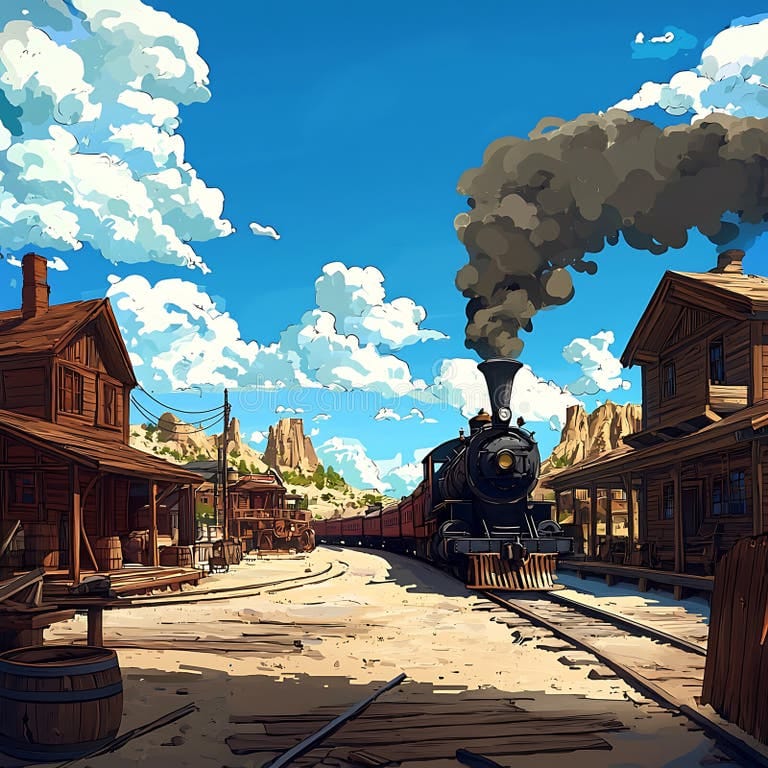
It legitimises our town to those who would slander it, it aides in the logistics of the towns construction, and adds luxury and opulence for the folk living there.
But before we can begin laying the groundwork for these rails, we need to make sure the land is clear of anything that would impede its construction.
That's our session; a hex crawl across the nearby wilderness, encountering all sorts of strange creatures and situations as we do so.
Today's Lens: The Lens of Emotion
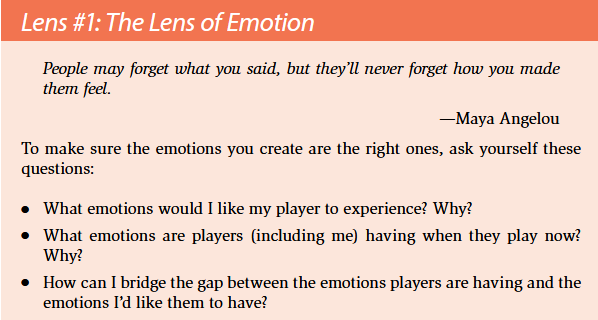
We immediately run into an interesting issue here. These lenses are designed for someone slowly building and iterating on a game over an extended period of time. The original sentiment behind this first lens is to look at what your players are feeling in your current iteration of the game, and consider ways in which to get them from where they are to where you want them to be emotionally.
A unique thing about TTRPG's is that there is no prototyping, the build is always live. You create your session, then you play it, and its either good or bad. Outside of one-shots, we can practice and prepare for our session, but we can't ever test it.
I can't ask my players to play through the same session multiple times so that I can figure out "This combat is too hard" or "This NPC isn't necessary" or "This puzzle is too complicated". Nor can I test it by asking other players to play through the session, because what one group finds important/fun, another might find superfluous/boring.
So how do we expand upon the framework this lens gives us to fit our needs? I think the answer is expanding our question from "how do I design a good session" to "how do I design a good campaign".
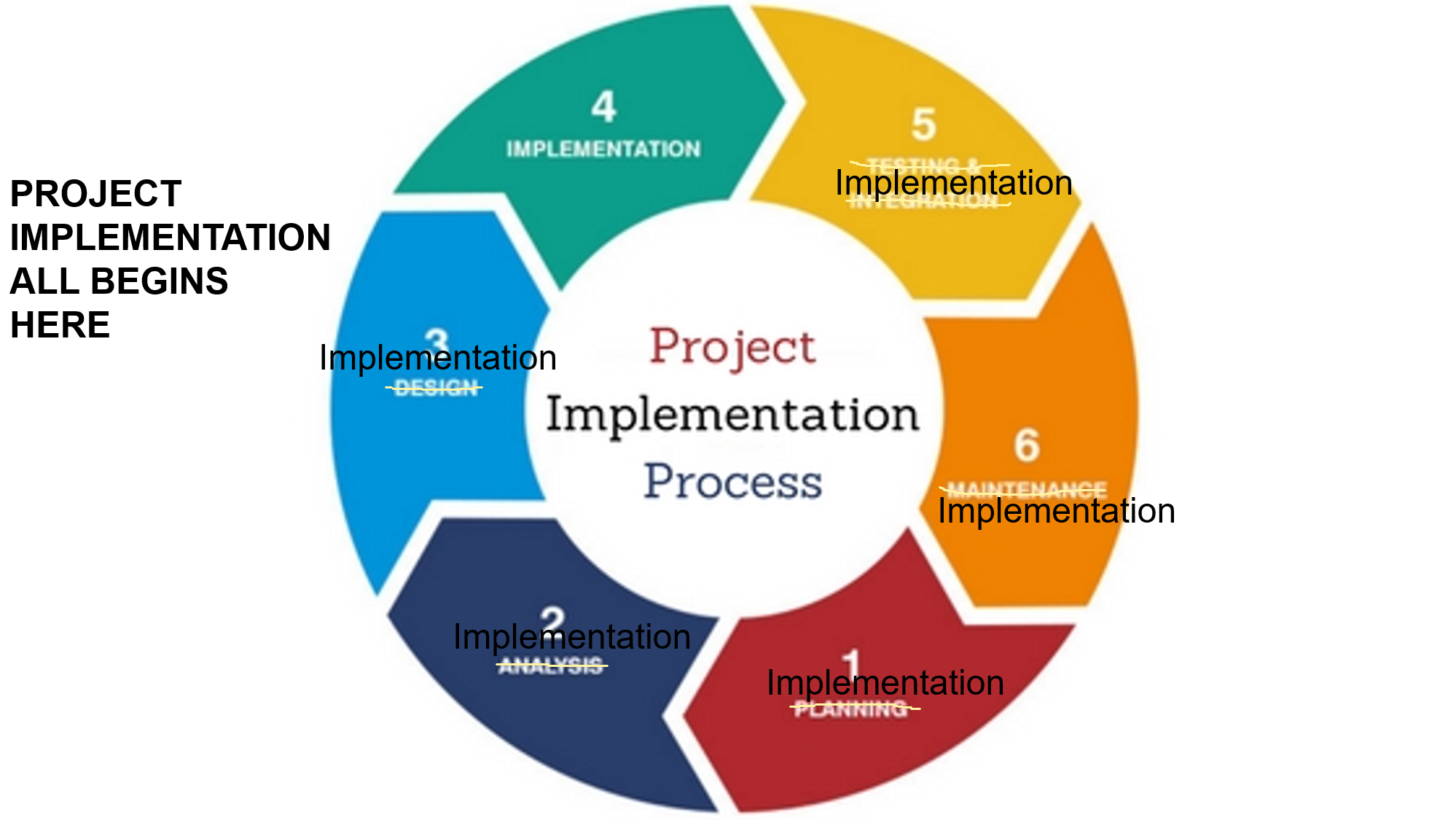
While taking a step back to view the bigger picture picture still does not allow us the freedom to iterate on our ideas, it gives us the ability to view each session as part of a larger whole.
From here we can see how our sessions weave together to form emotional peaks and valleys. Lets look at a simple example to illustrate what I mean
My players are currently Level 1. They are afraid of goblins and every roll of the dice is potentially life or death. My players feel Fragile, Humble, Free, Lacking Tools
By the time they are Level 15 I want them to feel Powerful, Heroic, Connected, Well Equipped. I want goblins to fear them
So we've got our start and our end point. How do we go about transmuting the emotions we start with into the ones we want?
The game itself will solve some of our problems.
- The more they play, the higher level they will become, making them more feel Powerful.
- The more they play, the more loot the game will provide, leaving them feeling Well Equipped and more capable of solving problems in interesting ways.
And those it wont, we can solve through the stories we tell.
- As I unfold the story I will present players the opportunity to feel Heroic through acting in defence of the things they care about
- As I unfold the story I will introduce them to new characters and institutions, helping them feel Connected to the world.
This emotional arc is a very stereotypical, very high fantasy, very swords and sorcery arc. But in my opinion, high concepts are over-rated.
Maybe it's my traumatised Chef self rearing his head, but I've always preferred simple ideas with excellent execution. So lets take a leaf from the French in 1793.
Lets get to the execution.
Looking In

At the start of our campaign, Marshall's Fall was little more than a few tents on tumbleweed swept plains. Now, halfway through the season, we are finally at tipping point where we go from a small outpost to a functioning town.
However in the same way our characters gain new responsibilities as they grow, so too does Marshall's Fall.
People living in a frontier outpost expect hardship, and are willing to accept the dangers that come with life in the middle of nowhere. Likewise, the tiny little frontier town of no particular import is hard to for onlookers to view as a threat.
That all changes as our town starts to grow up, and better gains the means to advocate for itself or take what it wants.
As such, there needed to be a big narrative shift here. One that represents the shift away from the challenges of frontier life, and towards the challenges of city autonomy and statehood.
In pursuit of this, I designed my session as a microcosm of that transition. The hex's closest to town contained the same random and strange encounters that the players were largely familiar with at this point -
Two duelists in a stand-off who don't want to shoot one another and instead unendingly spout melodramatic western film dialogue at one another.
A couple of mob stylised criminals burying rolled up rugs that are definitely just rugs in the middle of nowhere
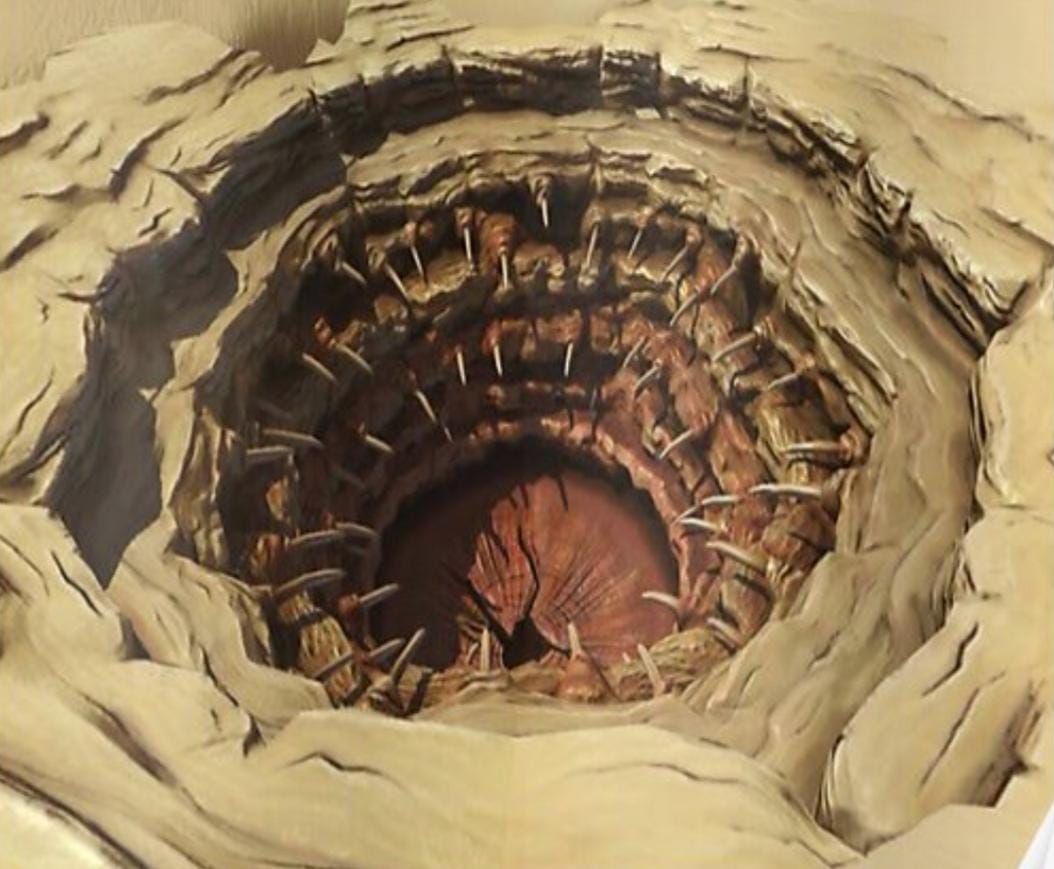
A Sarlacc pit
However, as we moved further and further east, we found increasingly that a neighboring state seems to be interfering with our efforts. People invoking authority that is not recognised in our land are setting up cordons, and conducting 'scouting missions' with military flying machines.
These threats don't have claws, or teeth, or supernatural weird-west powers. No, they come armed with something much more dangerous.
A political agenda.
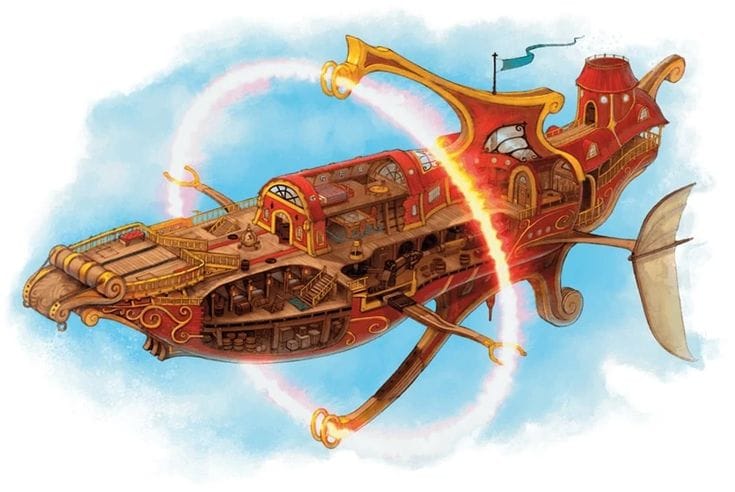
Where all of our previous encounters involved a threat that was acting of its own accord and could be neatly dealt with in the space of a 3 hour session. We are now beginning to see the face of a new threat.
One that is not going to go away because we spent 45 minutes dealing 2D8 damage to it every turn for 20 turns. One that wont leave our livestock alone if we can could just find it somewhere else to feed
To reflect this change, the last two encounters of my session involved the same group of Breland soldiers, and the official overseeing their activities.
My players first encountered them setting up a rather laughable cordon across the desert comprised of wooden stakes and vellum tape that declared "Under Brelish Authority: No Trains Allowed".
A brief confrontation occurred between my players and this group of soldiers, one that saw the soldiers nursing bloody noses as they fled via airship back towards the eastern border. The party then took their time clearing the cordon, and moved on towards a nearby town called Graywall as evening settled in.
Upon their arrival, they found that the soldiers they dealt with earlier had beaten them there, and were already in talks with the towns leader.
The train line would be allowed to come as far as Graywall, so long as the townsfolk promised to help the Brelish army prevent its expansion to Marshall's Fall.
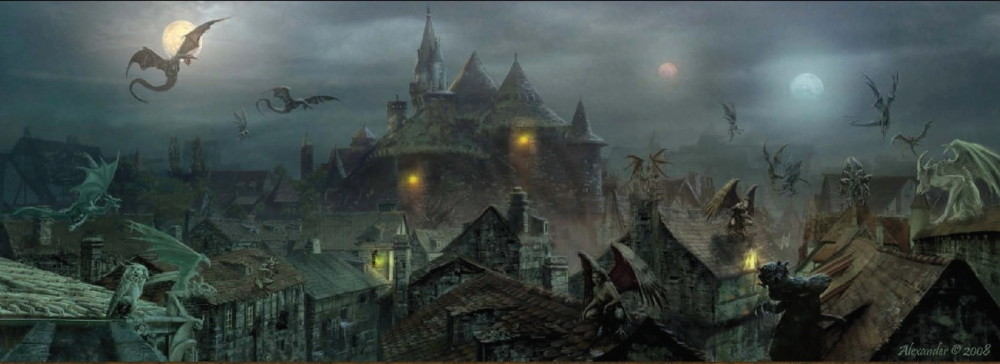
This is what it was all building up to.
This example of "Here is an enemy unlike any you've faced prior". You had won the earlier battle, but in the aftermath they maneuvered you, they came here in force, and they are driving a wedge between you and the people who should be your allies.
This is a foe that poses a threat to Marshall's Fall not out of circumstance, but out of a desire to do so.
A tense political exchange was had before the leader of this town decided to side with our players, aiding them in driving the Brelish forces from Graywall.
The battle was a total route - we are far from Breland's border, and its forces are spread thin. The only combatant of note on the Brelish side is a large flag-ship, The Raven's Call, hovering over the town. They stood little chance against our players and the town's leader.
Even less so when that leader happens to be a Mindflayer with a personal retinue of trolls, ogres, and gnolls.
Today's battle is over. Our heroes have won
But as we watch The Raven's Call limp back over its borders, we once again feel our foe already licking its wounds, consolidating its power, preparing for what comes next.
Because Marshall's Fall is no longer a mess of people gathered in the wilderness.
Marshall's Fall is now something worth fighting for.
Today's Answers

- What emotions would I like my player to experience? Why?
I want my players to feel connected to something bigger than themselves. I want them to feel a sense of responsibility as citizens and defenders of the monster-nation of Droaam. I want them to feel the elation in defending a people and place they care about from a malicious outside force.
Because this emotional shift represents our players change from a self-concerned mercenary, to a hero of their people
- What emotions are the players (including me) feeling now. Why?
I'm going to rephrase this question because as I mentioned earlier, we are expanding our scope to the campaign as a whole rather than a single discreet experience.
'What emotions had the players (including me) felt until now. Why?'
Until now, our sessions had largely been internal problems. Bad weather, roaming beasts, the occasional eccentric goblin, rats in the cellars.
We felt the problems that arise from trying to create something from nothing, we felt the limitations of what we were capable of, and we felt the threat of constantly having to be on-guard against unknown enemies that drink from the same river we do.
- How can I bridge the gap between the emotions players are having, and the emotions I want them to have?
By organically introducing a foe in a way that is ludonarratively resonant. They show the players that they represent something complex, that they come with an ideology, that they are willing to enforce their ideology, and most importantly -
That their ideology believes itself to be incompatible with yours.
They show the players that they destroy not because they must, but because they've been asked to. Bringing all the political baggage that sentiment carries along with it, raising the stakes, building, excitement, and adding narrative tension.
Adjusting to the Light
This is just a little post script to talk about some final thoughts and realisations I had while writing what is the first in a long line of Lensworks.
When I conceived of this idea, I planned on doing 3 lenses per post. I was a fool.
On top of that if I was to rank the ease of seeing clearly through this lens on a scale from 'telescope' to 'kaleidoscope', I'd place it somewhere around 'magnifying glass but it's being held by my drunk friend' - using it was largely an effort in wrestling with the concept and most of what I saw required some interpreting.
But interspersed with that were brief glimpses of important ideas that apply almost universally to any session.
Though we looked at our sessions as part of a larger campaign, we could also apply the lens on the scale of a single session. Something like -
'My players are feeling tense and fearful of the dungeon they have started exploring. How do I continue to build that tension until they meet the villain at the end?'
'My players are emotionally exhausted after surviving a hard won battle. How do I provide catharsis to my player, and reinvigorate them in preparation for battles to come?'
'We have had a lot of plot development and exposition recently. How do I get players from a largely passive state of thoughtful contemplation into a more active and energetic one?'
Questions for another time. For now, my current emotion is Hope that the next lens is something simpler.
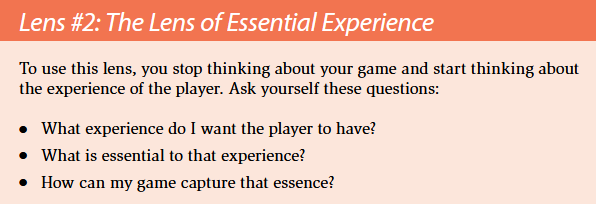
Next Lenswork. Lens of the Essential Experience